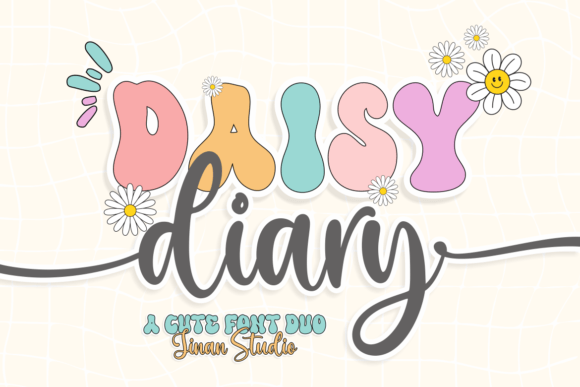
Daisy Diary: The Groovy Font Duo That Transforms Everyday Creations
There is a specific moment when a project feels just right, and then there is the moment it suddenly feels complete. For many creators, that final touch isn't about adding more content or changing the layout; it is often about the voice of the text itself. Daisy Diary enters this space not as a loud announcement, but as a stylish whisper that commands attention. This groovy, cute, and stylish font duo combines a playful display character with a fluid script, creating a perfect balance for anyone looking to elevate their visual storytelling without sacrificing readability.
Whether you are a small business owner trying to make your brand feel approachable or a blogger wanting to give your posts a personal, handwritten charm, this tool offers a versatile solution. It is designed to work seamlessly across a wide spectrum of applications, turning mundane documents into engaging experiences. The beauty of Daisy Diary lies in its ability to adapt to different contexts while maintaining a cohesive, fun aesthetic that resonates with audiences aged 20 to 50 who appreciate authenticity in design.
Why Designers and Entrepreneurs Are Choosing Daisy Diary
In a digital landscape saturated with rigid, corporate typefaces, standing out requires a shift toward personality. Daisy Diary provides exactly that. It is not merely a decorative element; it is a strategic choice for brands that want to communicate warmth, creativity, and human connection. When you use this font duo, you are signaling to your audience that your brand cares about the details and values a friendly interaction over a sterile transaction.
Consider the scenario of a freelance graphic designer pitching a rebranding package to a local coffee shop or a boutique skincare line. These businesses thrive on community and personal touch. A standard sans-serif might look professional, but it can also feel cold. Daisy Diary, with its lively curves and distinct glyphs, injects energy into the logo and marketing materials. It suggests that the products inside are crafted with love and care. For entrepreneurs, this font acts as a bridge between the product and the customer, making the brand feel like a friend rather than a faceless corporation.
The versatility of the duo allows for dynamic hierarchy. You can use the display portion for bold headlines that grab attention on social media feeds, while switching to the script version for body text or captions that invite the reader in. This combination ensures that your message is both impactful and intimate, a rare feat in modern typography.
Real-World Applications Across Creative Industries
The utility of Daisy Diary extends far beyond simple decoration. Its application spans various sectors, each benefiting from the unique characteristics of the font in different ways. Understanding where to apply it effectively can transform the outcome of your projects.
- Greeting Cards and Personal Invitations: For wedding invitations, birthday cards, or holiday greetings, the emotional impact of the font is paramount. Daisy Diary adds a layer of sentimentality that machine-printed text often lacks. The script style mimics the flow of handwriting, making the recipient feel like the message was written specifically for them by hand.
- Stickers and Merchandise: If you run an Etsy shop or print-on-demand business, stickers and apparel are high-volume items. The groovy nature of the display font makes designs pop against colorful backgrounds. It works exceptionally well for tote bags, mugs, and phone cases where a "cute" or "retro" vibe is desired.
- Banners and Event Signage: From local farmers markets to corporate retreats, banners need to be legible from a distance yet inviting up close. The strong structure of the display variant ensures visibility, while the stylistic flourishes keep the atmosphere light and festive.
- Educational Materials: Teachers and educators often struggle to make learning resources feel less intimidating. Using Daisy Diary in worksheets, classroom posters, or presentation slides can lower the barrier to entry for students, making educational content feel more accessible and fun.
Unlocking Potential with PUA Encoding
One of the most practical features of Daisy Diary is its PUA (Private Use Area) encoding. While this technical term might sound complex, the benefit is incredibly straightforward for users. In the world of fonts, accessing special characters, ligatures, and alternate glyphs often requires navigating confusing menus or using third-party plugins. With PUA encoding, all these amazing elements are mapped directly to unused keys on your keyboard.
This means you can access a vast library of swashes, dots, hearts, and other decorative ligatures with ease. Imagine writing a headline that says "Happy Birthday" but wants to include a little heart or a star connecting the words. Instead of inserting an emoji or a separate image, you simply press a specific key combination to activate the ligature within the font itself. This streamlines your workflow significantly.
For marketers managing tight deadlines, this efficiency is crucial. You spend less time searching for assets and more time refining the creative direction. The ability to toggle between standard characters and elaborate alternatives instantly allows for rapid experimentation. You can try a bold, connected look and then switch to a cleaner version to see which performs better, all within the same software environment.
Choosing the Right Context for Your Project
While Daisy Diary is powerful, it is not a one-size-fits-all solution. Successful application requires understanding the tone of your project. Before downloading or purchasing the font, consider the message you intend to convey. If you are designing a financial report, a legal contract, or a medical brochure, the playful nature of this font might undermine the seriousness required for those topics. However, for lifestyle blogs, fashion magazines, craft tutorials, and social media campaigns, it is an ideal match.
Think about your audience. Are they looking for quick information, or are they seeking inspiration? Daisy Diary excels in environments where engagement and emotion are the primary goals. It invites the user to pause and enjoy the visual experience. When used in a blog post header, it sets a welcoming tone that encourages readers to scroll down and read the content. In contrast, using it for long blocks of text might cause eye fatigue due to its decorative nature, so it is best reserved for titles, pull quotes, and short phrases.
Practical Tips for Maximizing Impact
To get the most out of Daisy Diary, treat it as a partner in your design process rather than just a default setting. Start by pairing it with clean, neutral fonts for body text. The contrast between the structured simplicity of a sans-serif body and the whimsical flair of Daisy Diary creates a balanced composition. This technique prevents the design from becoming overwhelming while still allowing the font to shine.
Experiment with spacing. Because the font has distinct curves and potential ligatures, adjusting kerning (the space between letters) can dramatically change the mood. Tighter spacing can create a sense of unity and excitement, while wider spacing can lend an air of elegance and sophistication. Don't be afraid to play with size either; sometimes, making the display font massive and letting it act as a background texture can create a striking visual statement.
Finally, remember that consistency builds recognition. Once you decide to incorporate Daisy Diary into your brand identity, stick to it. Use the display version for your main headers and the script for subheadings or accents across all your platforms. Whether it is your website, your email newsletters, or your physical packaging, a consistent typographic voice helps your audience recognize your brand instantly. By focusing on real-world scenarios and leveraging the unique capabilities of PUA encoding, Daisy Diary becomes more than just a font; it becomes a vital tool in your creative arsenal.