Madona Smith Font Evaluation
The landscape of digital and print typography is vast, offering designers a multitude of options to convey specific moods and brand identities. Among the many scripts available today, Madona Smith has emerged as a distinct choice for projects requiring a blend of formal elegance and authentic handwritten character. This article provides an objective evaluation of the Madona Smith font, analyzing its characteristics, ideal use cases, potential limitations, and how it compares to other script typefaces in the market.
Understanding Madona Smith: Design Characteristics
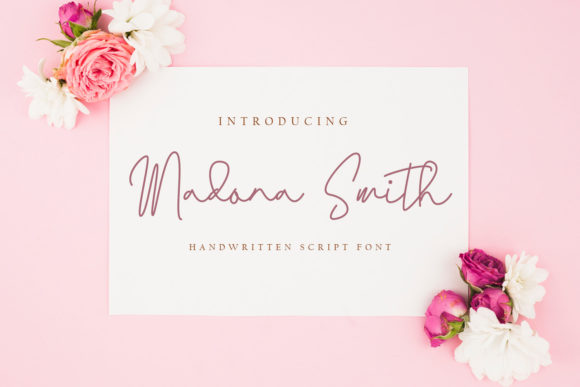
Madona Smith is classified as a magical script font, a category that typically implies a high degree of fluidity and artistic flair. The typeface was carefully created with a touch of elegance, aiming to replicate the nuances of authentic calligraphy while maintaining the structural integrity required for legibility. It represents a beautiful combination of timeless elegance and modern design sensibilities.
Visually, the font features flowing ligatures and varying stroke widths that mimic the pressure of a brush or fountain pen. Unlike rigid geometric sans-serifs or traditional serif fonts, Madona Smith introduces organic movement into a composition. The "magical" descriptor often associated with this font refers to its ability to transform standard text layouts into something more bespoke and personalized. It is not merely a decorative element; rather, it serves as a foundational voice for designs that need to communicate sophistication without appearing stiff or overly corporate.
Primary Applications and Use Cases
When evaluating whether Madona Smith fits a project, it is essential to look at the specific industry and the emotional resonance required. The font is versatile enough to elevate a wide range of design projects to the highest level, provided the context aligns with its aesthetic profile.
- Wedding Designs: One of the most common applications for this font is in wedding stationery. Its elegant curves pair naturally with floral motifs and soft color palettes, making it a strong candidate for invitations, save-the-dates, and ceremony programs.
- Branding and Logos: For businesses seeking a personal touch, such as boutique fashion labels, artisanal food products, or creative agencies, Madona Smith can serve as a primary logo element. It suggests craftsmanship and attention to detail.
- Editorial and Headings: In magazine layouts or blog posts, using Madona Smith for headlines can create a striking visual hierarchy. It draws the eye immediately, distinguishing the title from body text which should remain neutral and readable.
- Social Media and Labels: On product packaging or social media graphics, the font adds a layer of premium quality. It is particularly effective for luxury goods where the unboxing experience is part of the value proposition.
Benefits of Selecting Madona Smith
Designers choose Madona Smith for several practical and aesthetic reasons. The primary benefit lies in its ability to convey authenticity. In an era where digital content often feels sterile, a script font like Madona Smith reintroduces the human element. It suggests that a real person curated the content, which can build trust with the audience.
Furthermore, the font offers versatility within the script category. While some scripts are purely decorative and difficult to read, Madona Smith maintains a balance between style and function. It allows for complex compositions where the text itself acts as a graphic element. This dual functionality means designers do not always need to rely on heavy imagery to create interest; the typography alone can carry the weight of the design.
Additionally, the "timeless" nature of the design ensures longevity. Trends in typography often shift rapidly, moving from brutalist sans-serifs to retro serifs and back again. A font rooted in classic calligraphy principles tends to age better, reducing the need for frequent rebranding efforts solely due to outdated aesthetics.
Tradeoffs and Considerations
While Madona Smith offers significant advantages, it is not a universal solution. Every typeface comes with tradeoffs that must be weighed during the selection process. The most critical consideration is legibility. Script fonts inherently require more cognitive processing than block letters. If used for long-form body copy, Madona Smith can cause reader fatigue and reduce comprehension.
Another limitation is consistency across different platforms. Highly stylized scripts may render differently depending on the operating system or device resolution. While generally well-supported, fine details in the ligatures might disappear on lower-resolution screens or when scaled down too small. Designers must test the font thoroughly across various media before finalizing a project.
There is also the risk of overuse. Because Madona Smith is visually striking, it can quickly become overwhelming if applied too broadly. Using it for every headline, subhead, and button can dilute its impact, making the design appear cluttered rather than elegant. Restraint is key; the font works best when used sparingly to highlight specific elements.
When Alternatives May Be Worth Considering
Determining whether Madona Smith is the right fit requires comparing it against alternatives based on project goals. If the objective is maximum readability for data-heavy reports, educational materials, or technical documentation, a clean sans-serif or a highly legible serif would be a superior choice. In these contexts, the decorative nature of Madona Smith would detract from the information being presented.
Similarly, if the brand identity aims for a minimalist, futuristic, or industrial aesthetic, Madona Smith may feel out of place. Fonts with sharp angles, uniform stroke weights, or geometric forms would better align with those specific brand personalities. Additionally, for projects requiring a very casual, friendly, or approachable tone (such as children's apps or community outreach), a simpler, less formal script might be more appropriate than the elevated elegance of Madona Smith.
Designers should also consider the availability of font weights. Some script families lack the necessary range of weights (light, regular, bold) to support complex typographic hierarchies. If a project requires a robust system of headings and subheads, an alternative with a more extensive family structure might offer greater flexibility.
Practical Decision-Making Insights
To decide if Madona Smith aligns with your specific needs, follow a structured evaluation process. First, define the emotional goal of the project. Does the content require warmth, luxury, and tradition? If yes, Madona Smith is a strong contender. Second, analyze the reading distance and duration. Will the user read this for five seconds or five minutes? Short-term engagement favors script fonts; long-term reading favors neutral typefaces.
Third, conduct a mockup test. Apply Madona Smith to the actual layout alongside the intended imagery and color palette. Assess the contrast and spacing. Does the text compete with the images, or does it complement them? Finally, check the licensing terms. Ensure the font covers all intended uses, including web embedding, commercial printing, and client distribution.
In conclusion, Madona Smith is a powerful tool for designers looking to inject elegance and authenticity into their work. It excels in branding, wedding designs, and editorial contexts where visual appeal is paramount. However, it requires careful management to avoid compromising readability. By understanding its strengths and limitations, designers can make informed decisions that enhance their projects without relying on hype. When used strategically, it remains a valuable asset in the modern designer's toolkit.