Understanding The Little Baby Script for Design Projects
Selecting the right typography is a fundamental step in any visual communication project. While sans-serif and serif typefaces often dominate headlines and body text, script fonts serve a unique purpose by adding personality, warmth, and a human touch to digital and print media. Among the many options available, The Little Baby has emerged as a specific choice for designers seeking a playful aesthetic. This article provides an objective evaluation of this font, exploring its characteristics, ideal use cases, and practical considerations for those deciding whether to incorporate it into their workflow.
What Is The Little Baby?
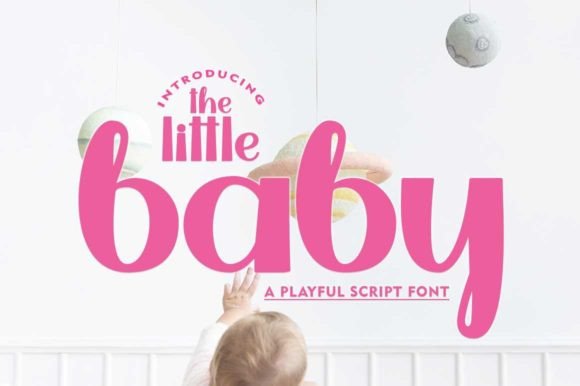
The Little Baby is classified as a playful script font. Unlike formal cursive typefaces that mimic elegant handwriting or strict calligraphy styles, this font is designed with a whimsical and informal character. The letterforms are rounded, slightly irregular, and evoke the feeling of casual note-taking or childlike handwriting. It is not intended to replicate professional penmanship but rather to capture a sense of fun and approachability.
In terms of technical structure, the font typically features connected letters that flow naturally from one to the next. The stroke weight is generally consistent, though variations in thickness may occur to simulate the pressure of a marker or brush. This design choice contributes to its distinct visual identity, making it immediately recognizable when compared to more rigid or geometric typefaces.
Key Applications and Use Cases
Designers evaluate fonts based on where they perform best. Given its playful nature, The Little Baby finds its strongest application in contexts where a friendly, informal, or creative tone is desired. It is particularly well-suited for the following scenarios:
- Digital Design: On websites, blogs, or social media graphics, this font can break up the monotony of standard text. It works effectively for blog headers, special offer banners, or user interface elements that require a lighthearted feel without sacrificing readability.
- Crafts and DIY Projects: For hobbyists creating scrapbooks, stickers, or handmade invitations, the font's handwritten appearance adds a personal touch that machine-printed text often lacks.
- Presentation Materials: When creating slide decks for creative workshops, team-building events, or educational sessions for younger audiences, using The Little Baby for titles can set a relaxed atmosphere.
- Greeting Cards: One of its most common uses is in card design. Whether for birthdays, baby showers, or thank-you notes, the font conveys warmth and sincerity, mimicking the gesture of writing a message by hand.
- General Design Projects: Any project requiring a "handmade" or artisanal vibe can benefit from the organic curves of this typeface.
Benefits of Using The Little Baby
There are several practical advantages to selecting The Little Baby for specific design challenges. Primarily, it enhances emotional engagement. Human beings are naturally drawn to imperfections; a perfectly straight line can feel cold, whereas a slightly wavy script feels authentic. By using this font, designers can create an immediate connection with the audience, signaling that the content is personal and accessible.
Additionally, the font offers high versatility within the realm of decorative typography. It pairs well with clean, neutral sans-serif fonts. A common strategy is to use a robust sans-serif for body copy to ensure legibility while reserving The Little Baby for headlines or pull quotes. This contrast creates a balanced composition where the script acts as a focal point without overwhelming the viewer.
Furthermore, for users working on commercial projects like greeting cards or party invitations, this font can reduce production costs. Instead of hiring a calligrapher for custom hand-lettering, designers can achieve a similar aesthetic quickly and efficiently using digital tools, allowing for rapid iteration and customization.
Tradeoffs and Considerations
While the benefits are clear, there are significant tradeoffs that must be considered before integrating The Little Baby into a project. The primary limitation is readability. Because the font mimics handwriting, some characters may be difficult to distinguish at small sizes or when viewed from a distance. In long paragraphs of text, the lack of uniformity can cause eye fatigue, making it unsuitable for body copy in documents, manuals, or news articles.
Another consideration is the potential for perceived unprofessionalism. If used in a corporate setting, legal document, or financial report, the playful nature of the font may undermine the authority and seriousness of the message. Designers must carefully weigh the brand voice against the font's inherent personality. A law firm would likely find this style inappropriate, whereas a children's toy store might find it essential.
Technical compatibility is also a factor. While most modern operating systems support OpenType formats, older design software or web browsers may not render ligatures or contextual alternates correctly. It is crucial to test the font across different platforms to ensure that the connections between letters remain smooth and that no characters appear broken or misaligned.
Situations Where Alternatives May Be Worth Considering
Although The Little Baby is effective for its intended niche, it is not a universal solution. There are situations where alternative typefaces may yield better results. If the goal is to convey elegance, sophistication, or luxury, a more refined script or a classic serif font would be a superior choice. Fonts that feature sharper angles and higher contrast in stroke width often communicate a premium quality that the rounded, soft edges of The Little Baby cannot achieve.
For projects requiring high legibility at scale, such as signage, mobile app interfaces, or data visualization, a geometric sans-serif or a highly legible slab serif is often the safer bet. These fonts prioritize clarity over character, ensuring that information is absorbed quickly and accurately. If the design needs to support multiple languages or complex diacritics, it is important to verify that the font includes the necessary character sets, as some playful scripts have limited language support.
Practical Decision-Making Insights
To determine if The Little Baby aligns with your goals, start by defining the emotional response you want the audience to have. Ask yourself: Does this project need to feel serious and authoritative, or does it need to feel inviting and fun? If the latter, this font is a strong candidate.
Next, consider the hierarchy of your design. Will this font be used for short bursts of text, such as titles, logos, or labels? If so, its stylistic impact will be maximized. If you plan to use it for extended reading, reconsider your choice. A good rule of thumb is to limit script fonts to 10-15% of the total typographic volume in a design.
Finally, test the font in context. Place it alongside your other chosen typefaces and review the design in black and white to check for contrast issues. Print a sample at the intended size to see how the details hold up. By approaching the selection process with these criteria in mind, you can make an informed decision that balances aesthetic appeal with functional effectiveness.
In conclusion, The Little Baby is a specialized tool in the designer's arsenal. It excels in creating warm, engaging, and personal designs but requires careful handling to avoid pitfalls related to readability and tone. When applied thoughtfully to the right projects, it can elevate a design from generic to memorable.